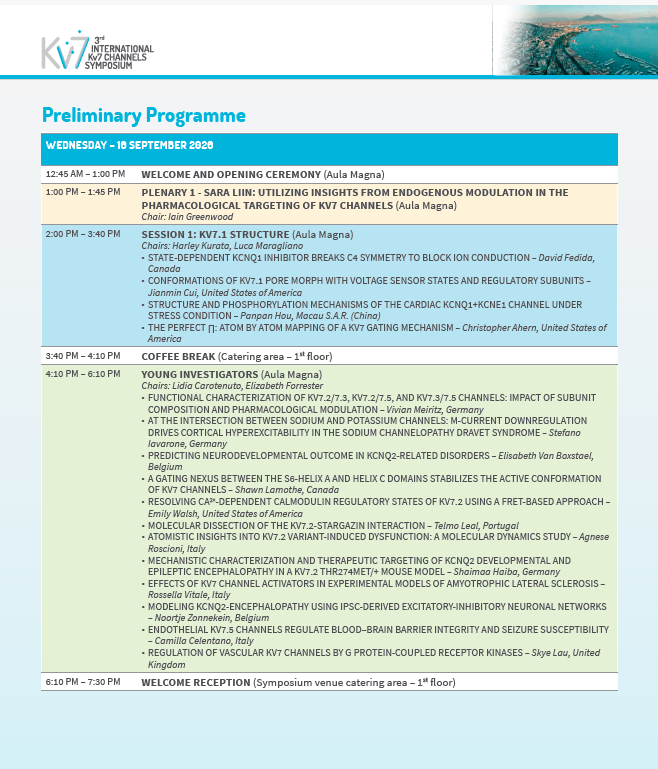
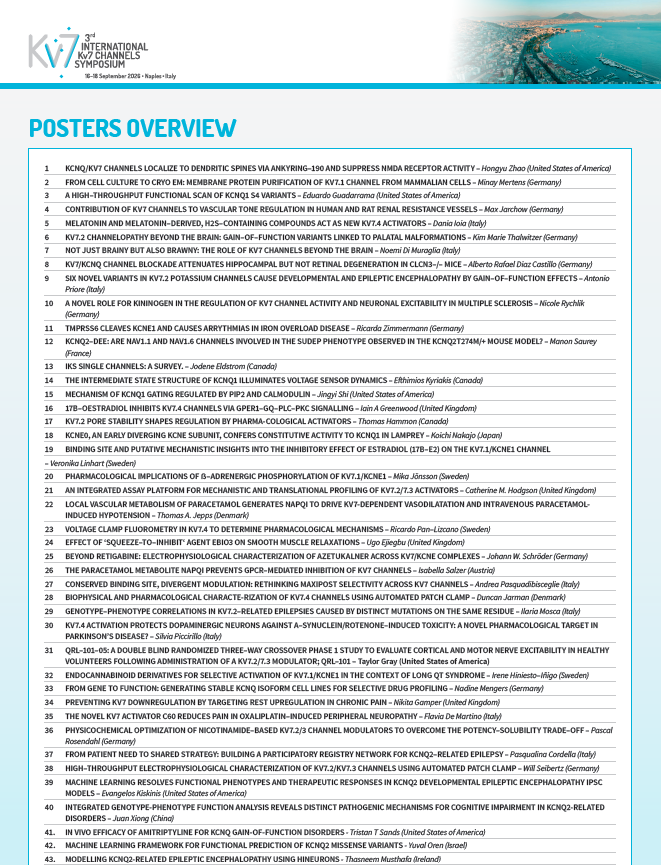
Main programme topics
- Physiological function
- Role in diseases
- Assembly properties
- Regulatory mechanisms
- Auxiliary proteins
- Pharmacological aspects
- Therapeutic targeting
- Tools and models
Confirmed plenary speakers

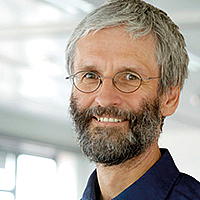
Prof. Dr. Thomas Jentsch
Department of Ion Transport Physiology and Pathology, Charité Berlin

Prof. Sara Liin
Department of Biomedical and Clinical Sciences, University of Linkoping

Prof. Jiangtao Guo
School of Medicine, Zheijang University

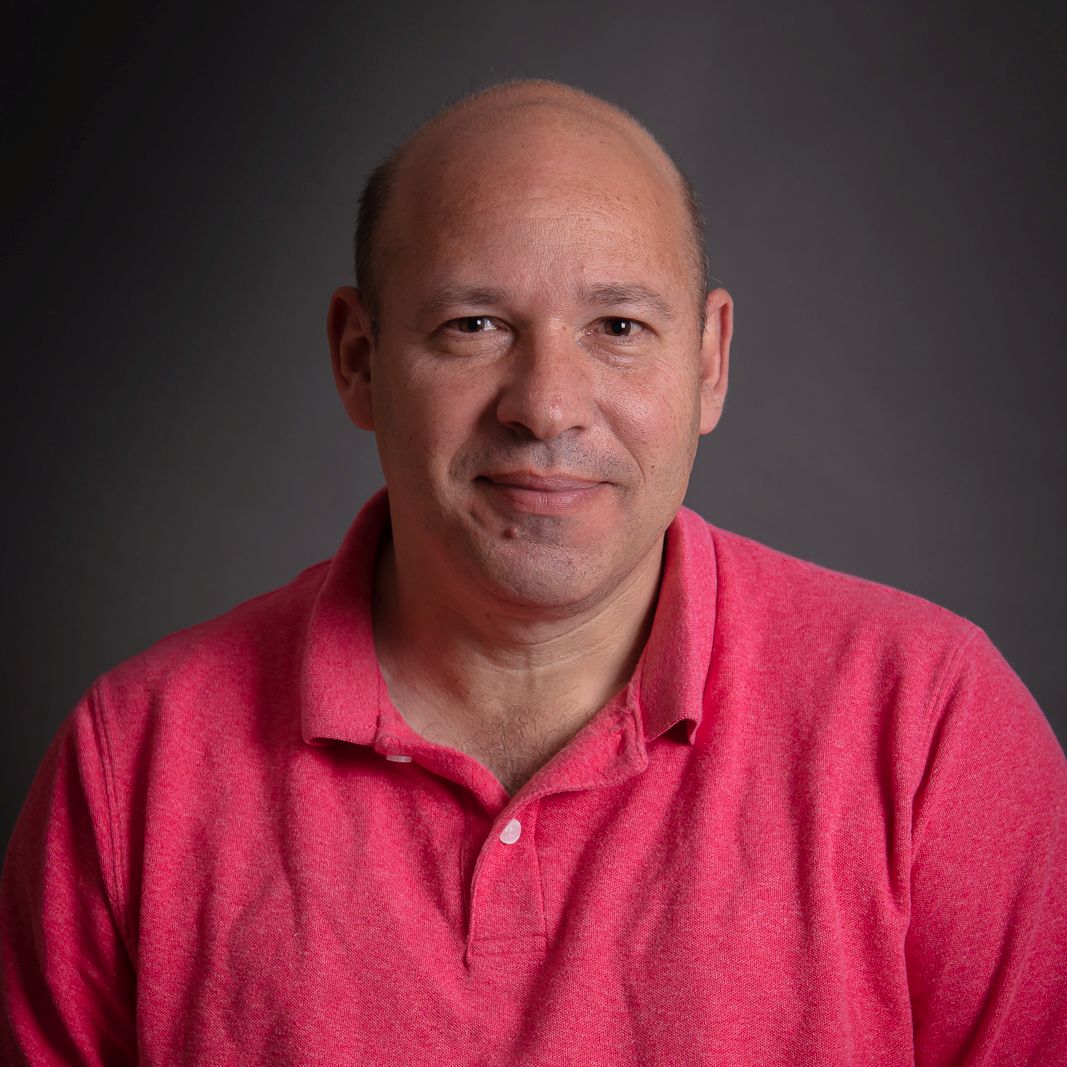
Prof. Anastasios Tzingounis
Department of Physiology and Neurobiology, University of Connecticut
I will give an overview on our discovery and characterization of the KCNQ family of K+ channels, their involvement in human inherited disease, and their characterization in genetically modified mice, including a short detour on the KCNE3 beta-subunit. focus will be on the role of KCNQs in physiology and pathology. This will include their function in the inner ear and their functional interaction with other ion transport processes which we again studied with mouse models.
Voltage-gated potassium (Kv) ion channels within the Kv7 family play important roles in regulating cellular excitability. Mutations in the genes encoding Kv7 channels are also associated with various diseases. Consequently, understanding how Kv7 channels are modulated by endogenous and pharmacological compounds is of broad interest.
This presentation will highlight recent advances in the pharmacological targeting of Kv7 channels, including examples of how insights into the molecular mechanisms of endogenous modulators can be leveraged in drug design.
Neuronal KCNQ (Kv7) potassium channels act as molecular brakes to prevent runaway neuronal excitability. For decades, their function has been framed around a single tenet: KCNQ3 and KCNQ2 assemble to generate the M-current, a voltage-gated non-inactivated potassium channel. Despite its success to explain the role of KCNQ activity in the brain, this tenet reduces KCNQ channel biology into a single current, obscuring how subunit composition and cell type specific regulation might control neuronal function and disease. Here, I will draw on findings from mouse models, including subunit-specific knockouts, knock-ins, and epitope-tagged alleles, to present three emerging ideas. First, KCNQ channels regulate excitability across a broad range of neuronal cell types, beyond those defined by strong spike-frequency adaptation. Second, KCNQ2 acts as an obligatory KCNQ subunit in most neurons. Third, KCNQ3 and KCNQ5 act as regulatory subunits whose contributions vary by cell type. These ideas help explain why gain-of-function variants in KCNQ3 are linked to autism spectrum phenotypes, whereas gain-of-function mutations in KCNQ2 lead to central hypoventilation. Taken together, current work suggest that KCNQ biology and disease are best understood in terms of subunit composition and cell-type context, rather than as a fixed KCNQ2/3 current.